Guttate psoriasis is a sudden and often surprising type of psoriasis that usually appears as dozens of small, red, drop-like spots scattered across the skin. It commonly affects children and young adults and may develop quickly after a throat infection or weakened immunity, making many people confused about its sudden onset. In this article, you will discover the real causes behind guttate psoriasis, how it develops through different stages, early and advanced symptoms to watch for, and the most effective medical and supportive treatment options, so you can take timely action and protect your skin with confidence.
What Is Guttate Psoriasis
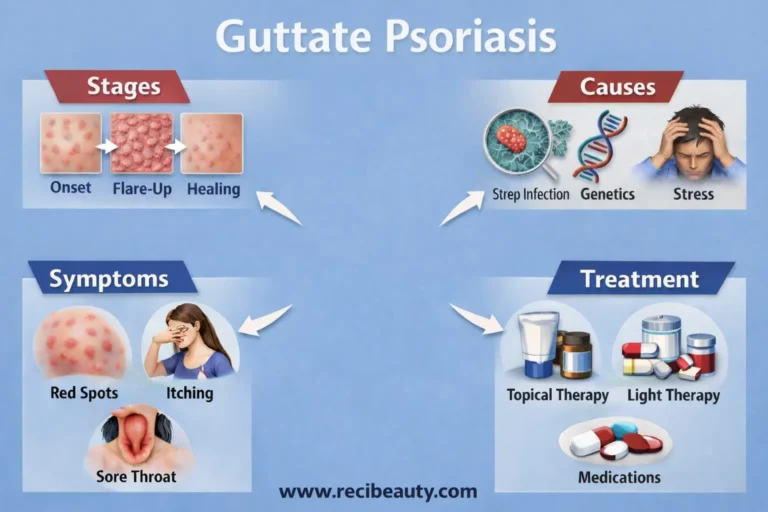
Guttate psoriasis is a type of psoriasis that appears suddenly as small, red or pink, drop-shaped spots on the skin. The word “guttate” comes from the Latin term meaning “drops,” which describes the distinctive pattern of this condition. It most commonly affects children, teenagers, and young adults and often develops after a bacterial infection, especially strep throat. These spots usually appear on the trunk, arms, and legs and may have a fine, scaly surface. Unlike chronic plaque psoriasis, guttate psoriasis can sometimes clear on its own, but in some people it may recur or progress, making early recognition and proper care important.
Causes Of Guttate Psoriasis
Guttate psoriasis does not have a single cause; instead, it develops when certain triggers activate an overreaction of the immune system in people who are already prone to psoriasis. In many cases, it seems to appear “out of nowhere,” but there is usually an underlying reason behind the flare
Bacterial Infection:
One of the most common causes of guttate psoriasis is a recent bacterial infection, especially strep throat or tonsillitis. The immune system, while fighting the infection, becomes overactive and mistakenly speeds up skin cell production, leading to the sudden outbreak of small, drop-like spots on the skin.
Genetics
Genetics also plays an important role; if this condition runs in your family, then the chances of developing it are higher. This form can be the first sign of an inherited tendency, even if you have never had psoriasis before.
Weak Immune System
Guttate psoriasis can also be triggered by a weakened or stressed immune system. Physical stress from illness, lack of sleep, emotional stress, or major life changes may disrupt immune balance and provoke a flare.
Skin Injuries
Other contributing factors include skin injuries, such as cuts, insect bites, or sunburn, which can trigger lesions at the site of trauma. Certain medications, including blood pressure drugs or some antibiotics, may also worsen or initiate symptoms in sensitive individuals.
Understanding these causes is important because identifying and managing triggers-such as treating infections early, reducing stress, and protecting the skin, can help control flare-ups and reduce the risk of future episodes.
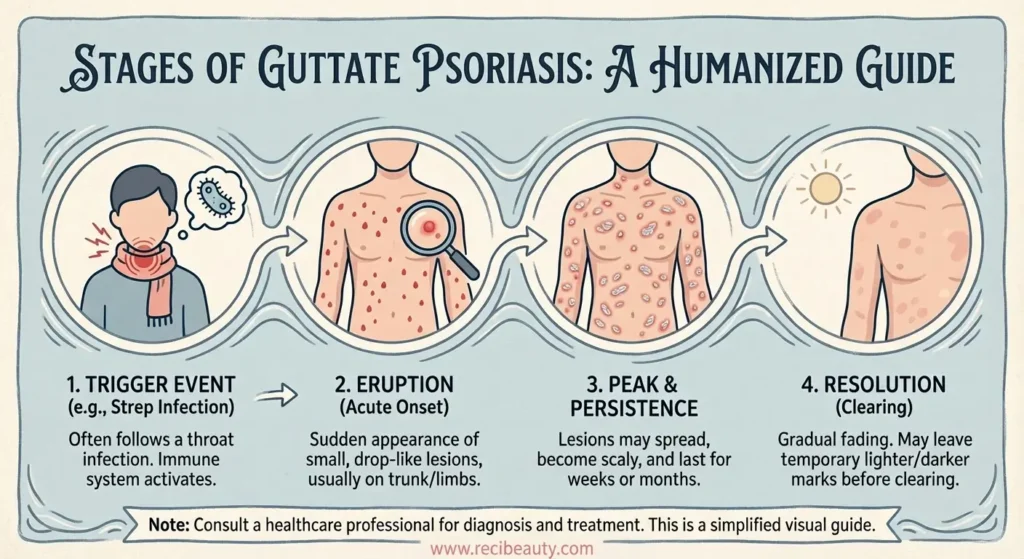
Stages Of Guttate Psoriasis
Symptoms Of Guttate Psoriasis
The symptoms of guttate psoriasis usually appear suddenly and can vary from mild to more noticeable, especially during the early weeks of a flare. Recognizing these signs early can help with faster diagnosis and proper.
Small, Drop-Shaped Spots
The most distinctive symptoms are the appearance of numerous small, red or pink spots that look like water drops splashed on the skin. These spots are usually less than one centimeter in size.
Fine Scaling On the Skin
A thin layer of white or silvery scales may form on the surface of the spots. The scaling is usually lighter and finer than what is seen I plaque psoriasis.
Sudden Widespread Rash
Lesions often appear quickly and spread across large areas of the body, especially the chest, back, abdomen, arms, and legs. Sometimes in milder form, the face, scalp, or ears may also be affected.
Mild To Moderate Itching
Many people experience slight irritation or itching, although it is generally less. It delays healing and can worsen inflammation.
Skin Sensitivity Or Discomfort
During active flare-ups, the affected skin may feel sensitive, tight, or slightly sore.
History Of Recent Infection
Many people notice these skin changes shortly after a sore throat, fever, or respiratory infection, which is a common trigger for guttate psoriasis
Guttate Psoriasis Treatment
Treatment of guttate psoriasis focuses on controlling symptoms, calming the immune response, and treating underlying triggers, especially infections. The approach depends on the severity of the condition, how widespread the lesions are, and whether it is a first episode or a recurring flare.
Treating the Underlying Cause
Because guttate psoriasis is often triggered by a bacterial infection such as strep throat, doctors may prescribe antibiotics if an active infection is confirmed. Treating the infection does not instantly clear the skin, but it helps prevent worsening and future flare-ups.
Topical Treatments (First-Line Care)
For mild to moderate cases, topical treatments are usually effective:
- Corticosteroid creams or ointments reduce redness, inflammation, and itching.
- Vitamin D analogues help slow excessive skin cell growth.
- Moisturizers and emollients keep the skin hydrated, reduce scaling, and support healing.
- Regular and gentle application improves comfort and speeds recovery.
- Light Therapy (Phototherapy)
For widespread or persistent guttate psoriasis, UVB phototherapy is commonly recommended. Controlled exposure to ultraviolet light helps reduce inflammation and slows skin cell turnover. This treatment is especially effective when topical therapies alone are not enough.
Systemic Treatments (Severe or Recurrent Cases)
In rare or severe cases, oral or injectable medications may be considered to suppress immune overactivity. These are typically reserved for people who do not respond to other treatments and require close medical supervision.
Supportive and Lifestyle Care
- Daily habits play a key role in recovery:
- Keep the skin moisturized and avoid harsh soaps.
- Manage stress, as emotional stress can trigger flares.
- Avoid skin injuries, scratching, and sunburn.
- Treat infections early and maintain overall immune health.
Frequent Asked Questions About Guttate Psoriasis
1. Guttate Psoriasis Stages?
It usually develops in a step-by-step pattern, and each stage has its own visible skin changes. It is categorized by severity based on skin coverage, such as mild, moderate, and severe.
2. How long will guttate psoriasis last?
In a few weeks, there is a good chance of disappearing completely. There is a small chance that some people to develop plaque psoriasis.
3. What happens if psoriasis is left untreated?
Symptoms can worsen over time, leading if this condition is left untreated. It leads to more frequent flare-ups, widespread skin lesions, persistent itching or pain, and a higher risk of complications such as skin infections and joint problems.
4. What foods trigger guttate psoriasis?
(Ultra-processed and sugary foods) and (Red and processed meats) promote inflammation and flare-ups.